Inside Pátio do Tijolo, Lisbon
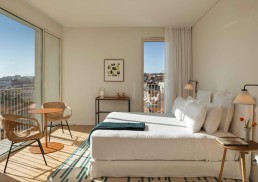
Pátio do Tijolo has opened its doors, a 24-room boutique hotel in Lisbon’s bohemian district of Bairro Alto.
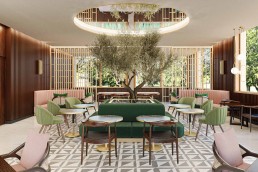
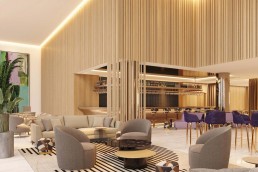
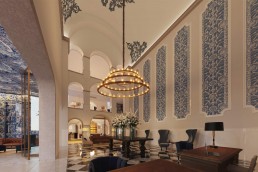
The hotel’s layout is centred around its shared spaces, including a plant-filled courtyard, kitchen and Loureiro salon, while interiors showcase a clean, minimalist style.
Created by Spanish interior designer Natalia Tubella and a team led by Carina Seelig of Lisbon-based architecture studio Base Geométrica, the public areas draw on a concept of ‘slow life’, promoting a way of living that is relaxed and contemplative.
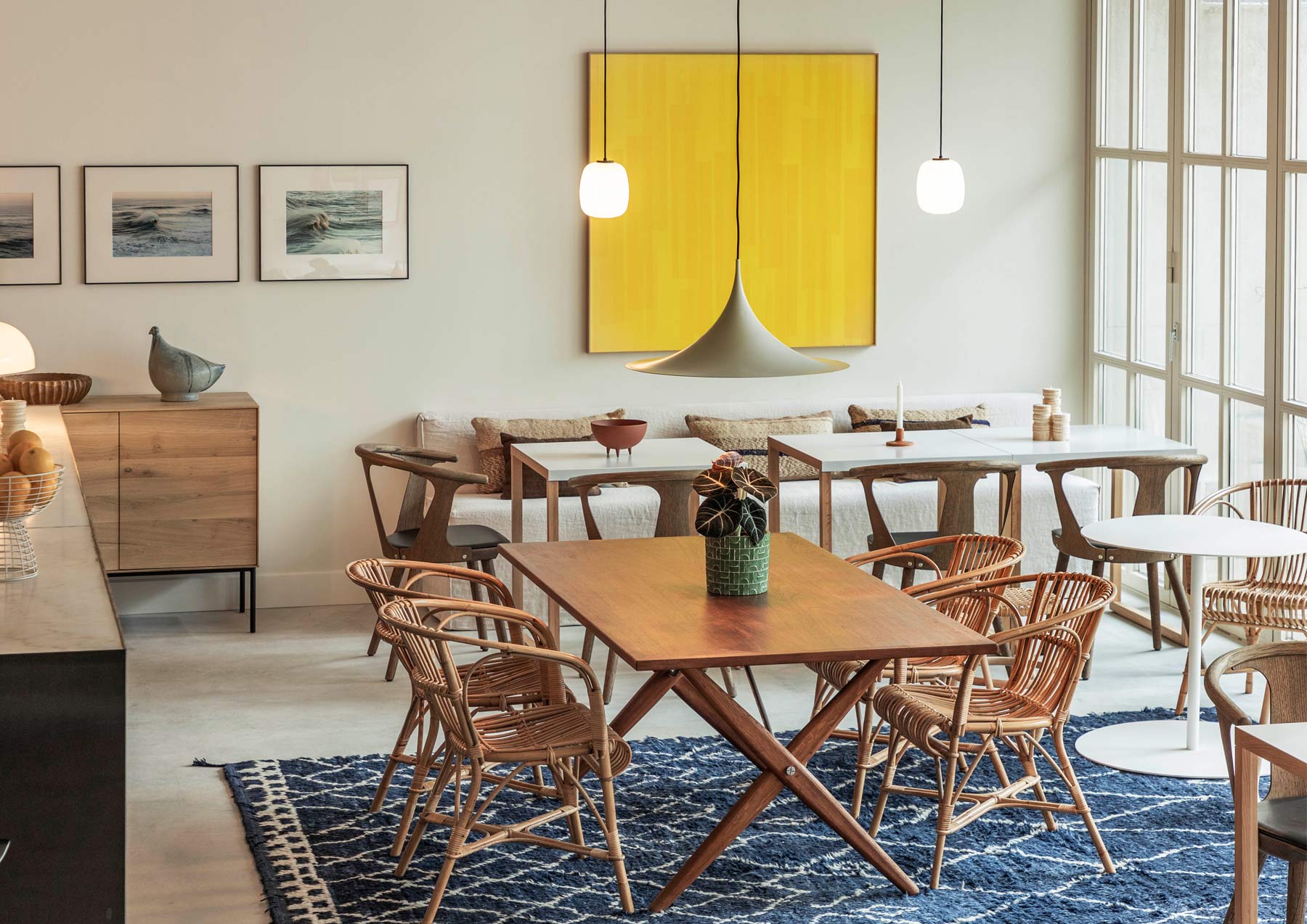
The warm tones of Lisbon’s limestone were selected for the building’s exterior, while the flooring recalls the pinkish hues of Lioz marble – a rare type of limestone found in Portugal. Elements of the hotel’s exterior are inspired by local Pombaline façades of the 18th century, with slender columns forming a wall of continuous balconies.
Inside, neutral colours and natural materials coexist alongside contemporary accessories like lighting by Spanish firms Santa&Cole and Marset, handmade Portuguese ceramics and contemporary photography by local artists.
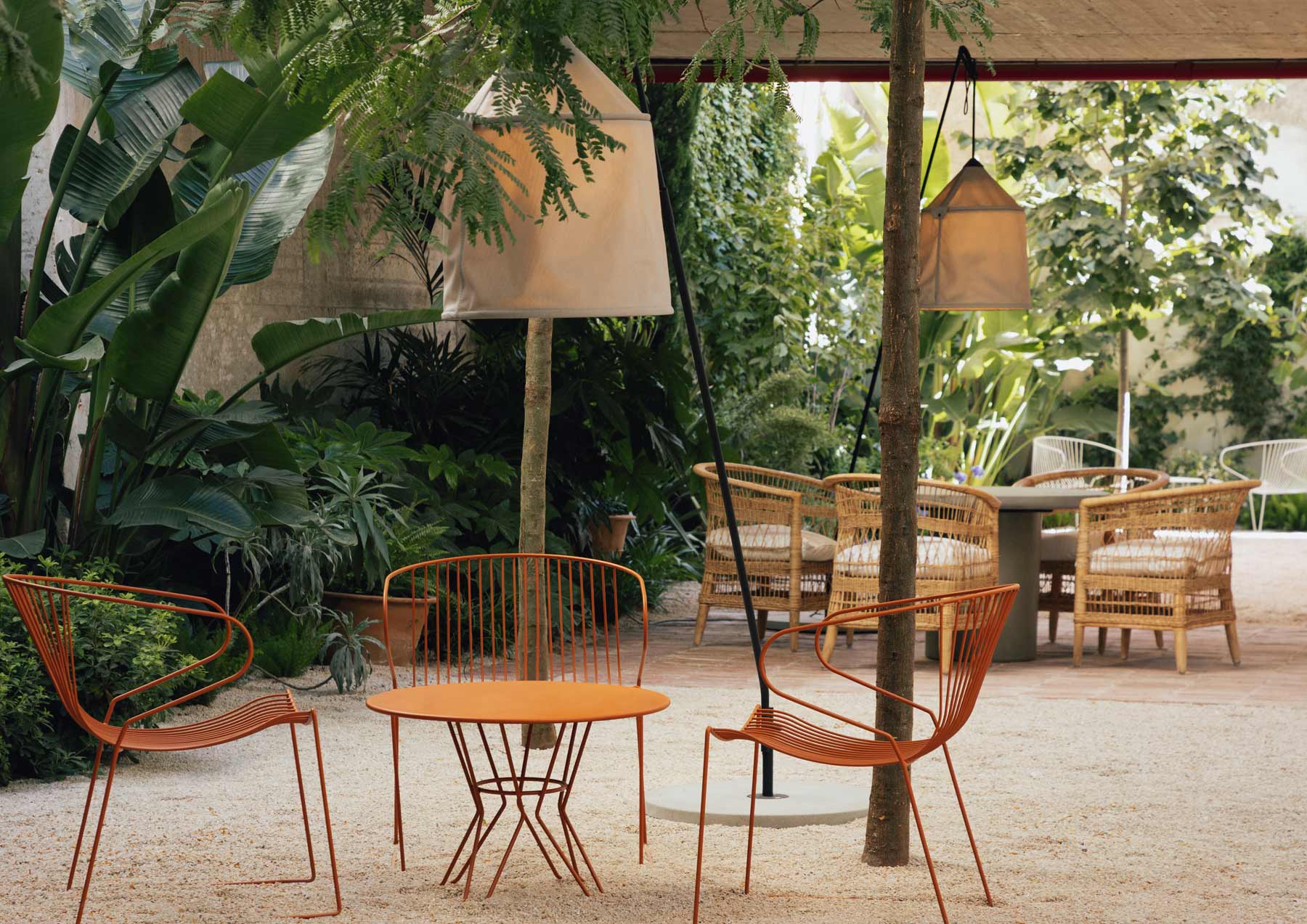
Landscape designer Elena Somalo meanwhile has brought together tropical species with plant types from central Europe, resulting in a broad range of volumes, forms and textures, which contrast with the primary colour palette of the property. Dozens of native tree species have also been planted, contributing to the ecological development of the location.
Care for the environment is also a consideration in the ‘zero-kilometer’ kitchen at Pátio do Tijolo, where the goal is to celebrate the quality of seasonal products, provided by small local companies and cooperatives.