Q&A: Sans Souci pioneers nanocoating surface treatment
Having been in development for nearly twenty years, Sans Souci founder and CEO Martin Chab discusses how its new nanocoating surface treatment is revolutionising hotel interiors.
How important is innovation in the glass lighting industry?
Innovation is absolutely essential – not just in glassmaking, but in the luxury industry as a whole. At Sans Souci, we aim to take the worry off the shoulders of designers and clients by consistently bringing new, original ideas to the table. In a fast-paced world, innovation allows us to respond quickly with fresh solutions that stand out and truly resonate. It’s the driving force behind our creativity and success.
How is Sans Souci pushing the boundaries of glass design?
We simply refuse to stay in our comfort zone – we innovate. Whether it’s through material combinations, experimental finishes or challenging what glass can actually do, we are constantly evolving. We don’t just repeat what’s been done – we reinterpret it with modern technologies and narratives. Innovation doesn’t always have to mean high-tech. Sometimes it’s about giving old techniques a new voice. Take high enamel, for example – often dismissed for its outdated aesthetic, yet the technique itself is rich with potential. By combining traditional crafts with innovation and strong design direction, we create something entirely new that still respects the story of the space. That’s what defines our work: a careful balance of tradition, technology and design shaped with intention.
What is your Nanocoating Surface Treatment?
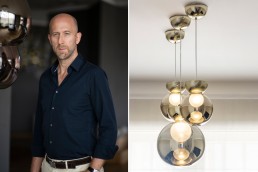
The result of many years developing and experimenting, it is an ultra-thin layer applied to glass – but we’ve pushed the limits in terms of colour, finish and transparency. Today, we can create surfaces that are fully reflective, semi-translucent or softly tinted. But it is not just about looks – the coating also adds practical benefits such as improved durability, resistance to humidity and even antibacterial properties.
How does the treatment provide durability?
It is completely inert, meaning it resists moisture, corrosion and wear over time. This is a huge step forward compared to traditional metal finishes. For high-traffic interiors, especially in hospitality, this durability makes a difference visually and practically.
What aesthetic advantages does your Nanocoating technology offer hotel interiors?
Designers are always looking for something new – something that makes a space unforgettable. Our nanocoating creates surface effects that traditional methods simply can’t achieve. From mirror-like reflections to subtle gradients and multichrome finishes, it opens up a whole new creative toolbox. Alongside its visual impact, nanocoating offers durability, easy maintenance and added protection – which is especially valuable in hospitality settings where both aesthetics and performance matter.
What are the environmental benefits?
We deliberately chose to avoid traditional galvanisation because of its environmental impact. Nanocoating uses no water, produces minimal waste and requires only a small amount of material. It’s a far more sustainable process – and that’s something both we and our clients care deeply about.
What’s next for Sans Souci?
We’re evolving from a lighting-focused brand into a broader design studio. That means extending our aesthetic language across entire interiors and creating cohesive solutions for entire spaces. Glass will always be our signature material, but we’re excited to explore new combinations – from natural stone to recycled elements – to better respond to each project’s needs. Whether it’s through modular systems like our recent Switch, dynamic lighting or new materials, we’ll keep blending craftsmanship, technology and imagination to reshape how people experience space. And innovation will always be at the heart of it.