Box 9 has unveiled the restoration and reimagining of The Hall, a Grade I listed Georgian stately home at the heart of the 2,500 acre Denton Reserve in Ilkley, Yorkshire.
Tasked with both architectural and interior design, the studio was briefed to rethink luxury hospitality fora new generation, restore a historically significant building and embed sustainability and circular design into every detail, as part of an ambitious wider regenerative vision at Denton Reserve.
In a departure from the traditional country house aesthetic, the design embodies a restrained and radical elegance. The Hall’s transformation is grounded in craft, conservation and materials innovation, drawing inspiration from the surrounding landscape and reconnecting guests to nature, place and self.

“We approached Denton with reverence and discipline,” explains Lou Davies, co-founder of Box 9. “Our mission was to quieten the building, to let it breathe and to create space for pause and reconnection. Every design decision was weighed against its impact – environmental, emotional and aesthetic.”
Originally designed by John Carr and completed in 1778, in recent decades the Palladian-style Hall has served as a traditional and ornate wedding venue.
Box 9’s intervention began with careful conservation work, restoring sensitively and stripping back distractions to reveal the original architecture. With listed building constraints requiring ingenuity, the team collaborated with specialist heritage planning consultants, working entirely within the existing layout and designing bathrooms and freestanding furniture as sculptural insertions, avoiding fixed partitions or built-in joinery that would compromise original sightlines.
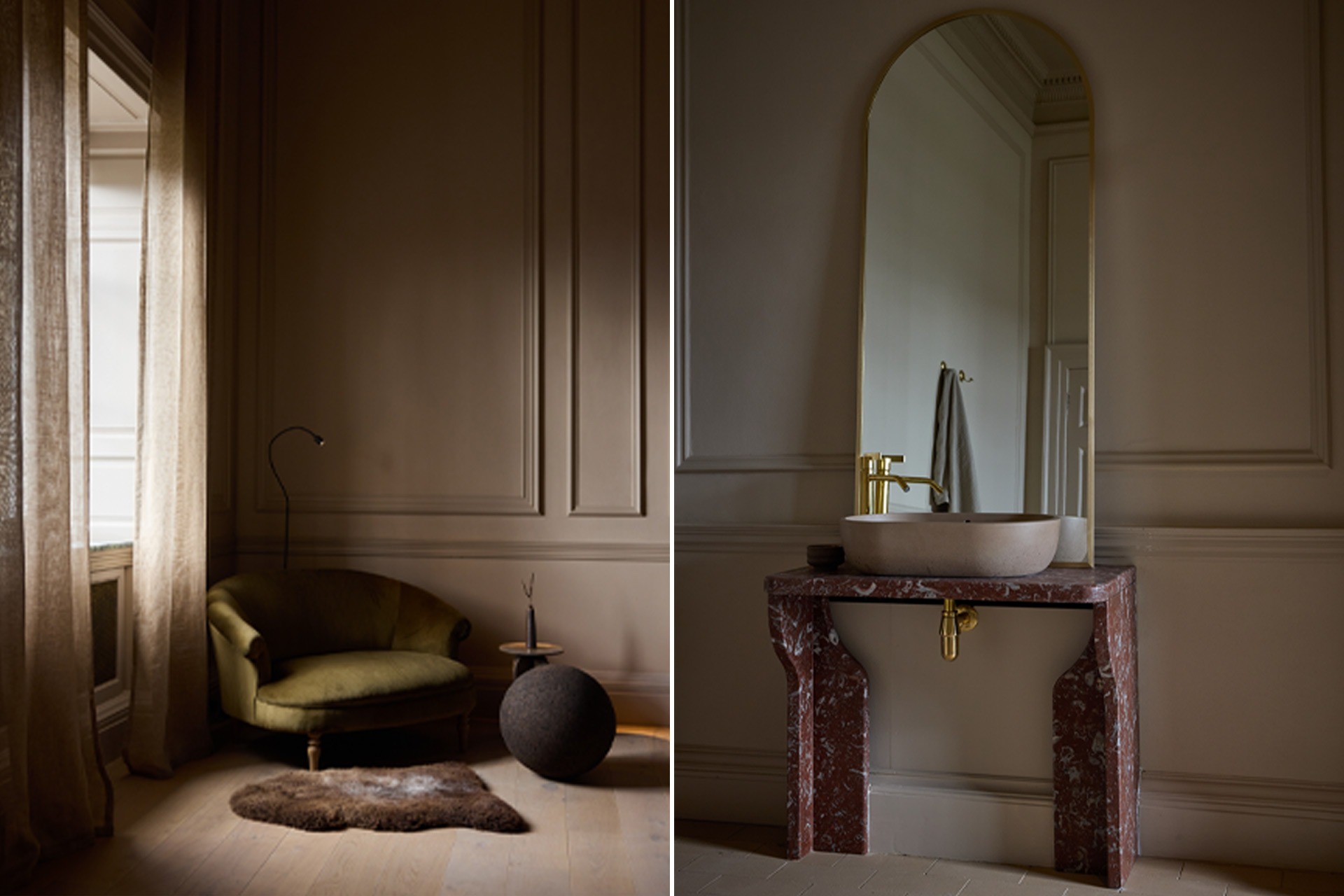
Throughout The Hall, Box 9 pursued a sensory, elemental palette of locally rooted, sustainable materials. Interior tones draw directly from the Yorkshire Dales – soil, stone, heather and moorland moss – while every object and furnishing was chosen for its potential to restore the land, the maker and the guest.

Highlights include a four-metre heather chandelier woven by Studio Amos from moor-harvested heather; a reception table crafted from storm-felled British oak, supported by sculptural cork spheres – designed by Box 9 in collaboration with Ted Jefferis as part of the Box 9 Collection; and a 2.5m diameter marble centrepiece table in the living room made entirely from industry waste offcuts by Leleni Studio.
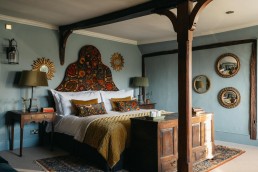
The guestrooms have solid wood furniture including a desk by Jason Posnot of Or This Studio, purposefully positioned to take in views of the moors and grazing sheep, inviting stillness and reflection.
Sculptural surfaces in every room are thoughtfully considered from cabinetry made from 100% post-consumer plastic by Smile Plastics and marble and travertine side tables by Atelier278, to Jan Hendzel’s transformation of the old marquetry board room table into a new games room centrepiece.
In the Middleton Lounge games room, Jan Hendzel Studio playfully reimagined an original marquetry boardroom table, cutting it down to a smaller circular form, mounting it on hand-turned hardwood legs and inlaying a new marquetry suite of playing cards into its surface as a nod to the original design.
A signature waved-edge drawer was added beneath, crafted in Hendzel’s iconic style, while a vegetable-dyed leather net by Charlie Borrow completes the piece.
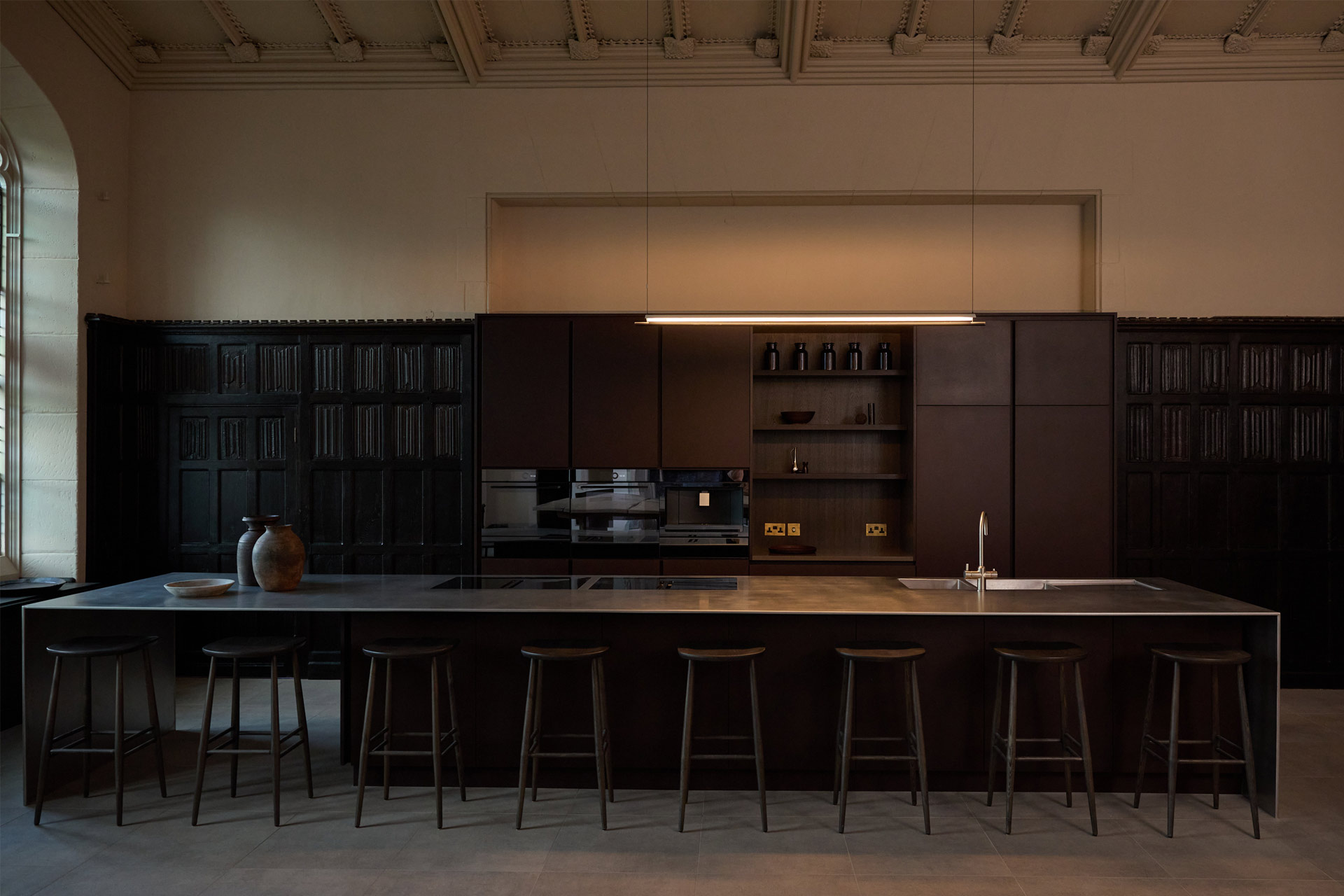
In the gothic panelled kitchen, Box 9 inserted a monolithic steel island and chocolate Valchromat joinery to rebalance the room. At its centre sits an oak dining table designed by Ted Jeffries from a singular fallen ancient oak from the estate, demonstrating the studio’s deft negotiation of heritage and contemporary intent.
From immersive art to inclusive gathering spaces like the Still Room, a peaceful room for self-care, and the informal Middleton Lounge, the design and flow gently encourage guests to interact together.
Every design element was chosen with intent for its story, its sustainability and its ability to contribute to a more thoughtful, inclusive future, including the hand-aged oak floors pressed by The Main Company in Yorkshire and art commissions by emerging talents like Rico White and established artists like Pejac – as part of a wider curatorial collaboration with Anarchy Art Club.
Additional design details include paints that are textured with crushed olive stones, basins cast from 75% recycled concrete, and cork – the project’s hero material – that is used boldly, from cladding to furniture elements.
“We set ourselves an incredibly high bar. Every single piece and material had to leave a legacy of positive change – whether through sustainability, supporting a maker, empowering an emerging studio, or championing innovation,” comments Davies.
“If it didn’t have the potential to restore landscapes, lives or our relationship with craft, it didn’t come through the doors. What we used was respected, applied with minimal waste, and always designed to inspire care and reconnection with craft and nature.”
The Hall is now available for exclusive hire, from private celebrations, work retreats to intimate weddings, with ten suites in the main building, five bedrooms in the West Wing and fifteen additional rooms due to open in the East Wing in late 2025.
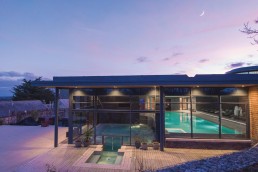
The Hall sits at the centre of a phased estate transformation – which includes short-stay accommodation, wood-fired wellbeing cabins, bothies, coach houses, The Penny Bun, wild swimming and a wider wellness and hospitality offering shaped by the same ethos of restoration and regeneration, all entirely designed and reimagined by Box 9.
Davies concludes: “We dared to empty The Hall so it could breathe again. In doing so, we found something deeper – a new kind of luxury rooted in care, craft, and connection.”