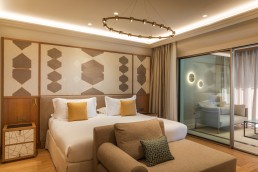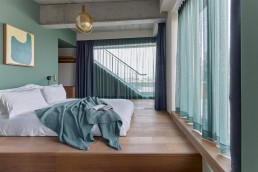
Corinthia Rome has unveiled six signature suites, completing the final chapter in the restoration of a historic palazzo in Piazza del Parlamento.
Each suite has been designed with a distinct identity. The two Campo Marzio Suites (I and II) are designed as two-storey townhouses. The living area is bathed in light filtered through stained-glass windows that frame views of the Parliament, the city centre streets or the internal garden lounge. A sculptural staircase leads to the upper floor, where the bedroom is complemented by two marble bathrooms and a walk-in wardrobe. The result is a precise balance between dramatic verticality and residential intimacy.
The Chigi Suite, on the fifth floor, is built around the relationship between interior and exterior. From the private patio, a spiral staircase leads to a 90m2 panoramic terrace, furnished with a dining area and lounge zones. The view sweeps over the Roman rooftops to parliament, emphasising a continuous openness towards the city.
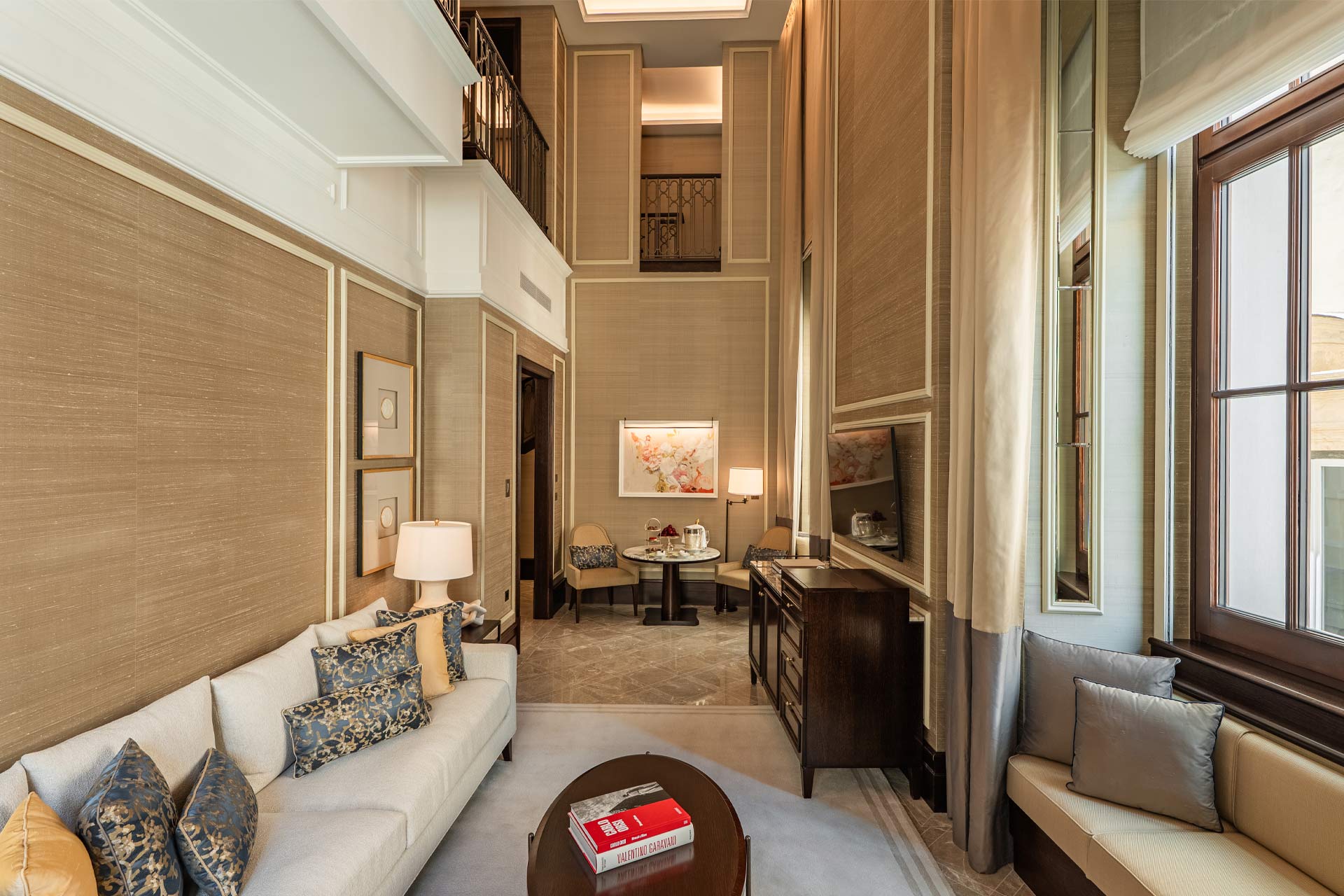
On the sixth floor, The Arte Suite has the intimate scale of a collector’s home. The bright living room opens onto a dining room, while the bedroom overlooks the internal garden. A staircase leads up to a 70m2 private terrace, designed for sunset views. The walk-in wardrobe, the marble master bathroom and the second guest bathroom complete a layout that prioritises continuity and fluidity.
The Aurea Penthouse, whose name is inspired by the Domus Aurea, occupies a commanding position. Two bedrooms, both with en-suite marble bathrooms and walk-in wardrobes, are arranged around a large living and dining area that opens onto multiple terraces. The suite features an additional guest bathroom and outdoor spaces furnished with seating and sun loungers. The colour scheme is based on shades of gold and pink, with subtle references to the imagery of Nero.
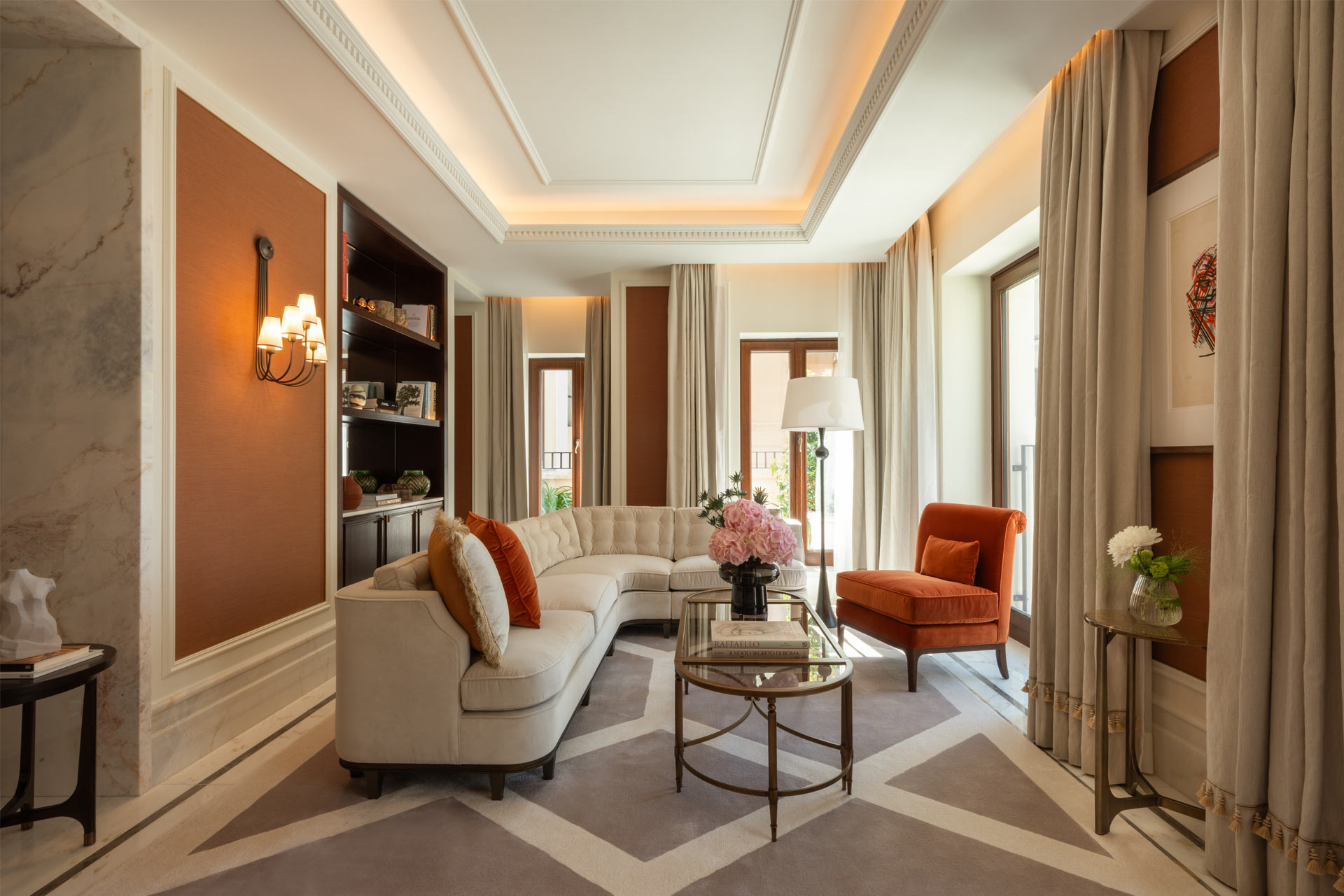
Finally, the most extraordinary space in the hotel is Theodoli Heritage Suite, created from the former Council Chamber of the Bank of Italy, which overlooks Montecitorio directly. Here, an exacting restoration has fully revived one of the most significant decorative cycles from early 20th-century Rome. The walls preserve the frescoes by Giulio Bargellini, a continuous sequence which draws inspiration from the Italian Renaissance and Andrea Mantegna.
The ceiling, painted by Guglielmo Janni, unfolds a visual history of Italian currency through sixty-two rosettes that trace its evolution from Etruscan origins to the twentieth century. Janni intentionally left two rosettes empty, conceiving these absences as an open space, entrusted to the future prosperity.