Hyatt Hotels Corporation have announced the reopening of Park Hyatt Tokyo following a 19-month restoration by Studio Jouin Manku.
The project, which the Paris-based design studio approached with sensitivity and boldness, marks the hotel’s most comprehensive renewal in its 30-year history.
Having initially opened as a design-forward rule-breaker atop Kenzo Tange’s Shinjuku Park Tower, Park Hyatt Tokyo is famed for its soaring glass atriums, intimate residential interiors by John Morford and panoramic views of Tokyo and Mt. Fuji.
The hotel’s restoration, which entailed four years in planning and 19 months in execution, preserves and enhances the sense of journey that has always defined a stay at Park Hyatt Tokyo through softer forms, warmer materials, refined details and expanded sightlines.
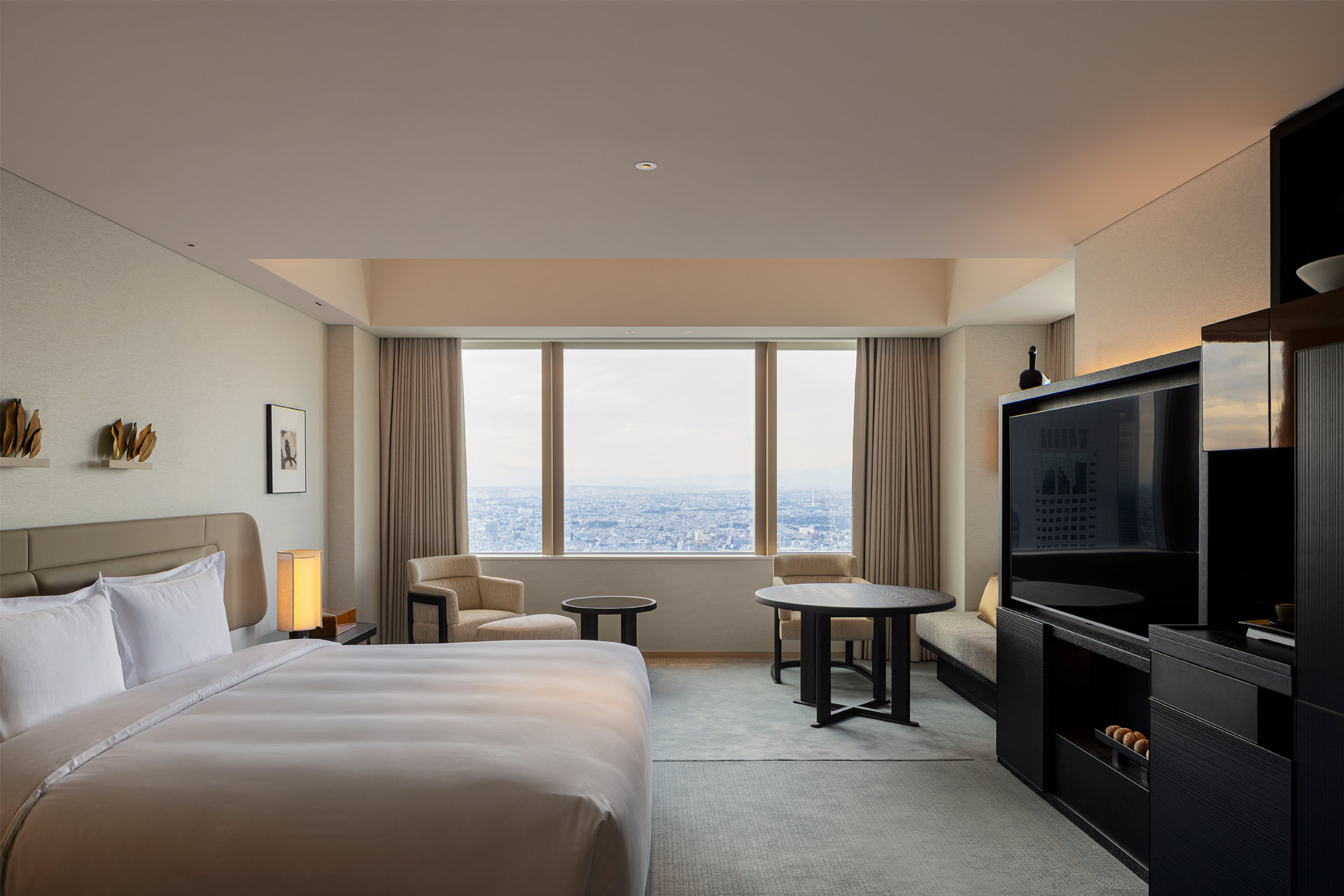
Originally designed to embody modern Japan’s dynamic spirit and timeless traditions, Jouin Manku’s 171 redesigned rooms embrace fluid layouts and tactile materials, as well as spotlighting contemporary Japanese art. The suites feature Yoshitaka Echizenya’s works, while newly commissioned lithographs enhance standard rooms.
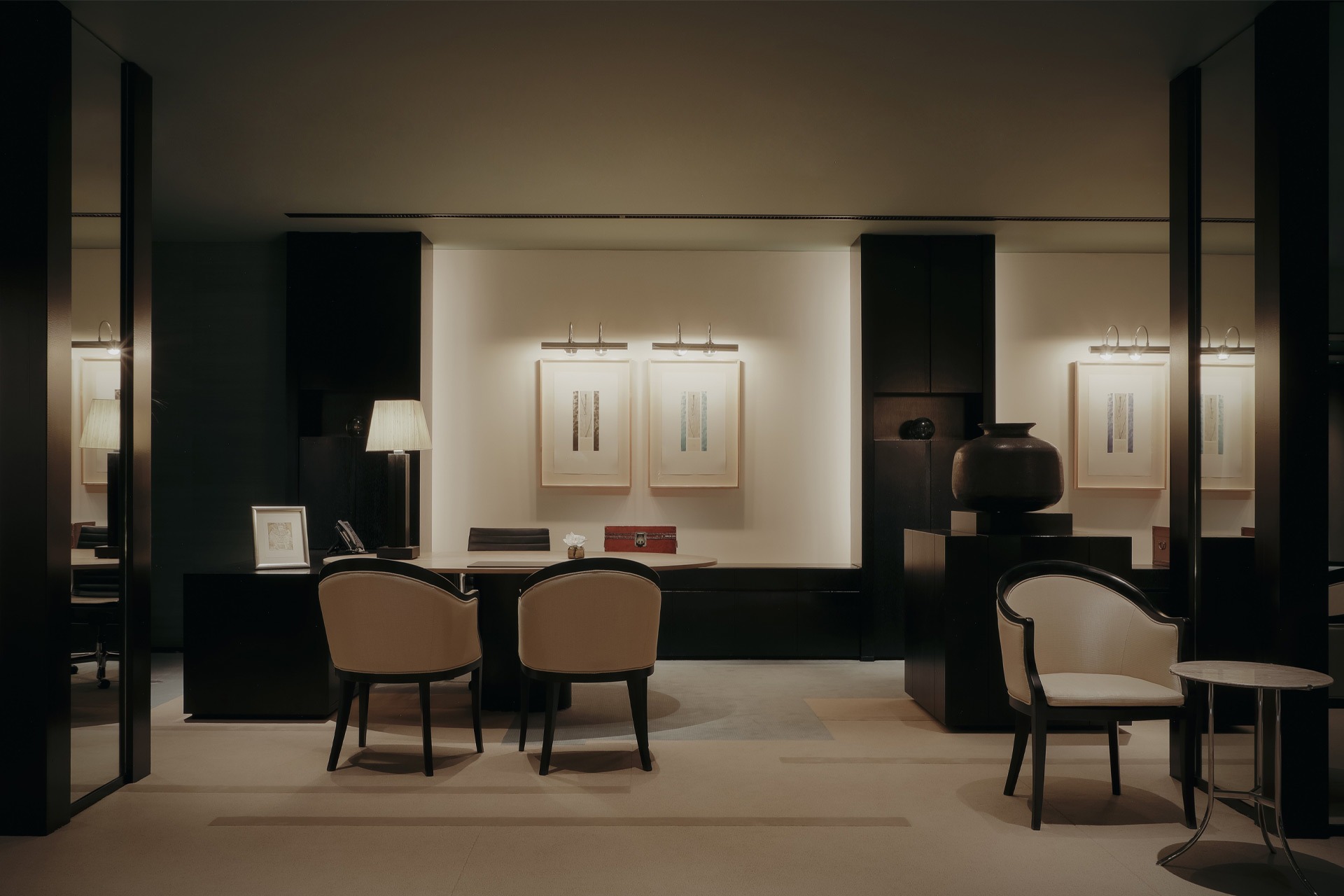
Signature elements – magnolia leaf decoration and Isamu Noguchi’s iconic washi lamps – remain integral to the hotel’s narrative of art, light and texture. Custom furnishings maintain the black-anthracite palette accented by softer green carpeting for a contemporary feel.
Among the highlights is the new Park Suite, featuring generous living and dining spaces, walk-in closets and sweeping views of Harajuku, Shibuya, Meiji Shrine and Yoyogi Park. Deluxe Rooms offer king or double beds, deep soaking tubs and daybeds with views of the city or Mt. Fuji.
Studio Jouin Manku also reinterpreted the Diplomat, Governor’s and Presidential Suites, while the Tokyo Suite was restored to its original design.
In the Diplomat suite, mid-century details define the space, with warm walnut furnishings, a dining table with an Italian marble tabletop and a feature wall displaying artwork by Akira Nagasawa and Yuko Iwakiri. The suite includes a Yamaha grand piano, separate living and bedroom areas, a dining table for six and a pantry, as well as a spacious walk-in closet and a separate half bathroom.
The Governor’s Suite has been designed for quiet reflection. It features a palette of bordeaux tones and pale hinoki wood, inspired by the purity and ritual of Japanese shrines. The space includes a grand piano, separate living and bedroom areas, a dining table for four, a daybed and a spacious walk-in closet, along with a separate half-bathroom.
The bathroom brings together hinoki and Japanese cedar with Ombra di Caravaggio marble, revealing a natural Red Rising Dragon vein – a distinctive, painterly detail within the stone. A Japanese hinoki deep soaking tub and separate shower complete the serene experience.
The largest of the suites at 3,122ft2, the Presidential Suite serves as the hotel’s most exclusive accommodation. Anchored by a grand piano in the Cultural Salon, the suite is comprised of three salons – Library, Dining and Living – each defined by warm timber, richly veined marble and custom furnishings by Patrick Jouin.
Materiality plays a central role throughout, from tailored rugs to the use of glass that reflects light and depth across the suite. The bedroom incorporates soft, tactile fabrics and a sculptural headboard, while the bathroom, finished in Italian Breccia Capraia marble, includes a city-facing bathtub, jet bath and steam sauna, all oriented toward sweeping skyline views.
The suite also offers a dining room for ten with a bar, entertainment area, kitchen, spacious walk-in closet and separate half-bathroom. A connecting room option is available with two double beds in the Premier category.
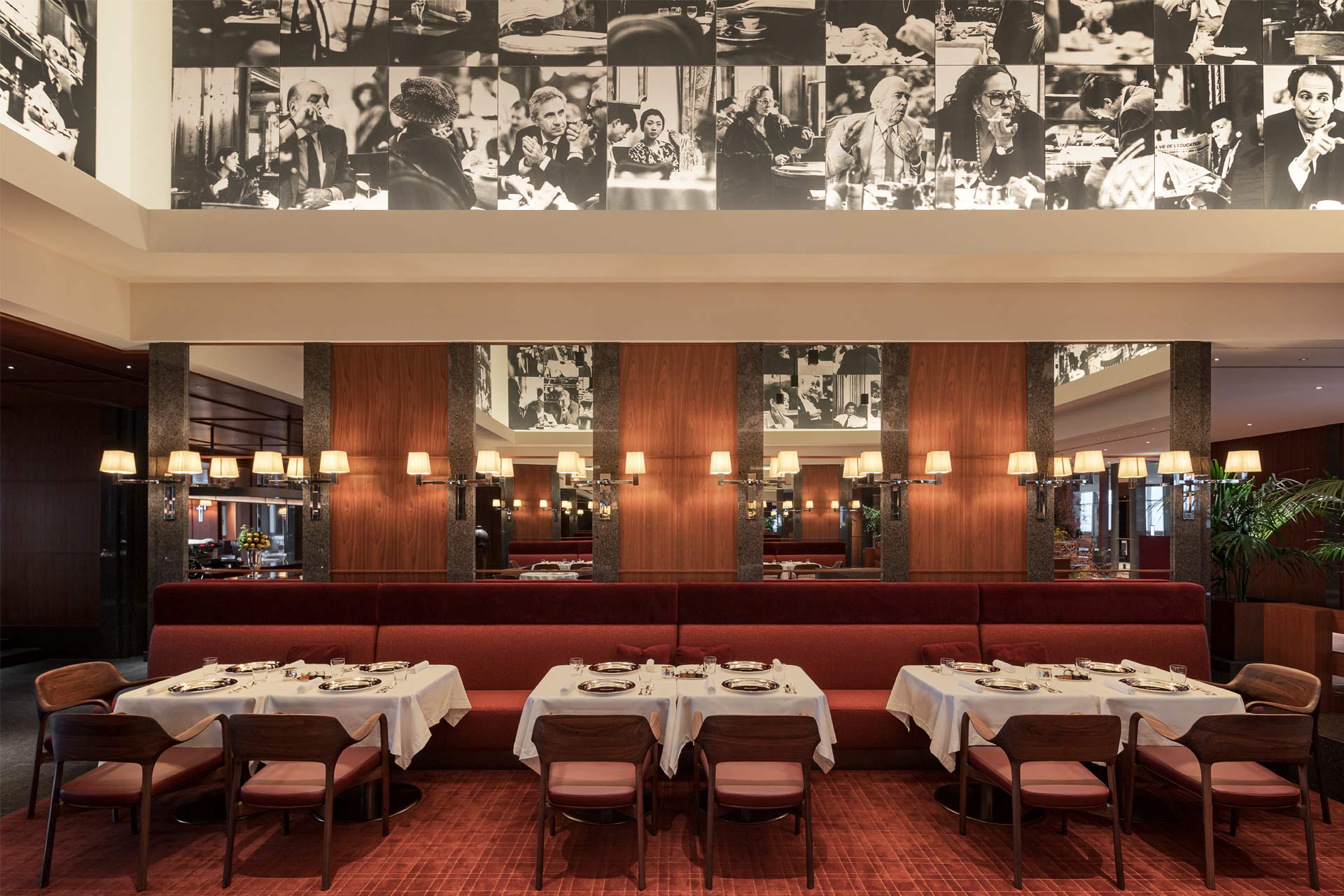
In addition to its grandiose suites, Park Hyatt Tokyo’s F&B offerings underscore the hotel’s commitment to luxury and service. Debuting as part of the hotel’s transformation, Girandole by Alain Ducasse introduces a new expression of Parisian dining in Tokyo. A 5.5ft Italian girandole pedestal at the entrance showcases rotating floral art by UI Florist Workshop, the creative force behind the hotel’s iconic arrangements throughout its history.
At the heart of the space, a black walnut and red Italian marble culinary console shifts from gourmet breakfast to a lively cocktail hub by night. Deep-red fabric and velvet banquettes, mirrored walls and bordeaux accents by Studio Jouin Manku evoke a modern Parisian brasserie, complemented by Vera Mercer’s 144-image collage celebrating European café culture. For intimate gatherings, the Ex Libris Room offers a semi-private retreat lined with artist-designed bookplates from around the world.
The Peak Lounge & Bar, meanwhile, crowns the first of Tange’s three towers beneath a soaring glass atrium and tranquil bamboo grove. A single block of Chelsea Grey marble bar anchors the space with eight glass and metal lanterns in an homage to Kenzo Tange’s architecture, while the renewed bamboo garden – combining the 1994 Golden Bamboo with new Thai shoots – preserves a sense of continuity high above the city.
New York Grill & Bar has also been restored to its original black-and-chrome grandeur, offering sweeping skyline views accented by Valerio Adami’s murals and Minoru Nomata’s Metropolis series.
Set high above the city, Kozue continues to present modern Japanese cuisine in a space that evokes contemporary refinement grounded in tradition, with its warm walnut interiors and panoramic views of Mt. Fuji,.
Rounding out the hotel’s F&B options, the Delicatessen – set to reopen in March 2026 – welcomes guests with comforting fare and a relaxed atmosphere framed by cascading water features and whimsical sculptures by Mieko Yuki, while The Pastry Boutique is conveniently located on the second-floor main hotel entrance and connected to the Delicatessen on the first floor.
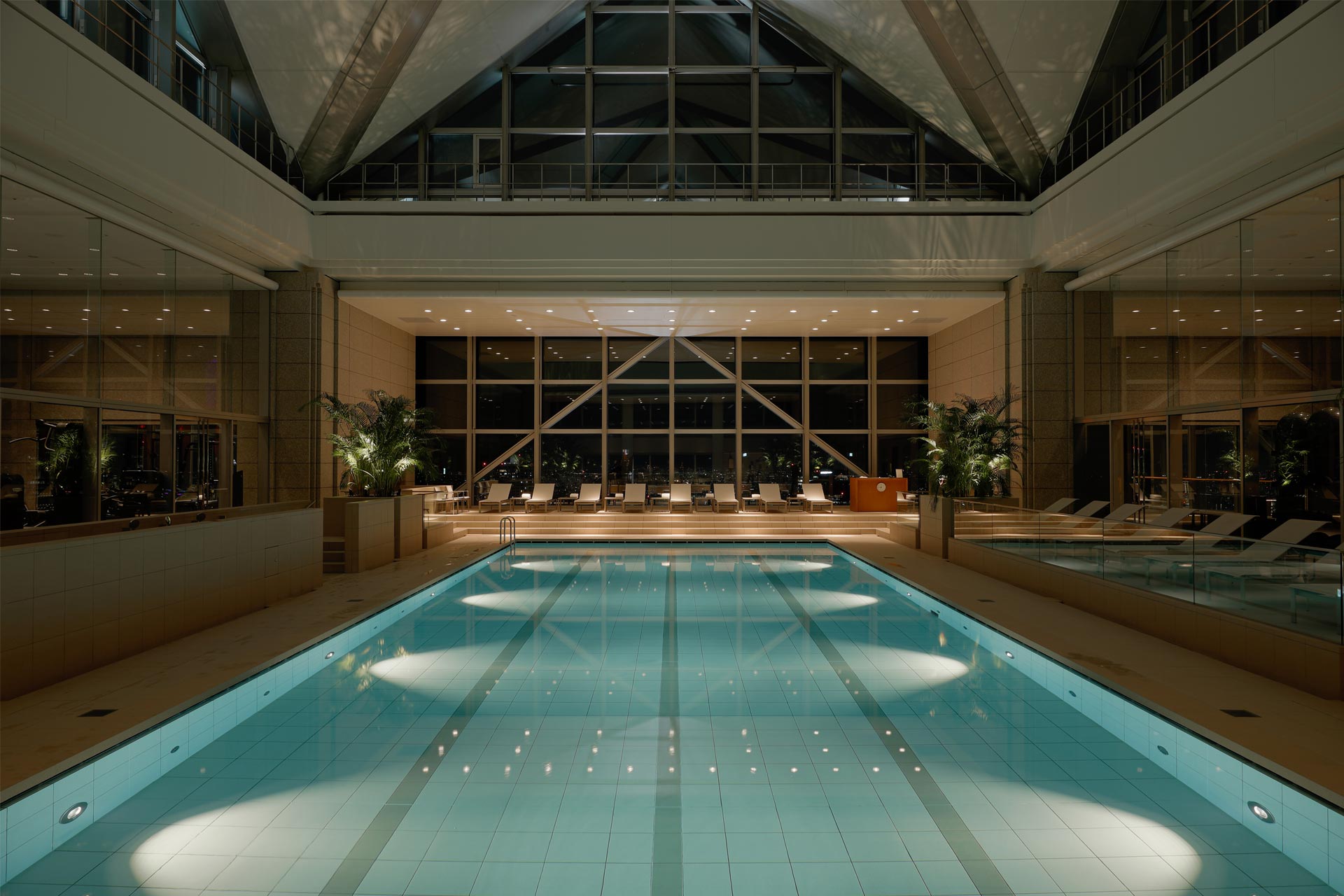
Park Hyatt Tokyo’s wellness offering, Club On The Park, spans the 45th and 47th floors, offering 22,600ft2 of fitness and wellness facilities high above the city. Highlights include a 65x26ft swimming pool set beneath a soaring 47ft glass atrium with panoramic Tokyo skyline views, state-of-the-art Technogym Artis equipment and a schedule of daily fitness classes. In addition, the spa features marble whirlpools, saunas, cold plunges and seven private treatment rooms, including a couples’ suite.
Commenting on the restoration, Patrick Jouin, Cofounding Principal of Studio Jouin Manku, comments: “For a project like this, the design challenge is like walking a tightrope. Do too much, and you risk disrespecting the past; do too little, and you neglect the future.
“Our approach to Park Hyatt Tokyo was not to ask what should change, but to listen to what time had already revealed. Some elements needed to remain untouched, others elevated or softened—always with the gentleness owed to a place that listens and breathes.”
Jouin’s partner, Sanjit Manku concludes: “In a city as vibrant as Tokyo, silence itself can be a form of luxury. The hotel has always embodied a quiet strength. Our goal was to rekindle its warmth – to let its spirit breathe anew, so guests can once again feel the serenity and humanity that define this place, while preserving its iconic character for the next 30 years.”