
The historic Milan Marriott Hotel has entered a new chapter following an extensive interior renovation by Spagnulo & Partners, the Milan-based architecture and interior design studio led by Federico Spagnulo, Alessandra Carbone and Andrea Spagnulo.
Encompassing the hotel’s 317 guest rooms, public areas and event spaces, the project establishes a contemporary architectural language that draws on the property’s history and its longstanding relationship with the city.
The project is guided by a principle of architectural continuity, expressed through a system of geometries, proportions and materials that evolves across the interiors according to their scale and function.
The grid emerges as a recurring design element, first appearing in the full-height shelving that structures the public areas before becoming a graphic motif reinterpreted in handwoven rugs and textiles. As it shifts in scale and material, its precise geometry takes on a softer, more tactile expression.
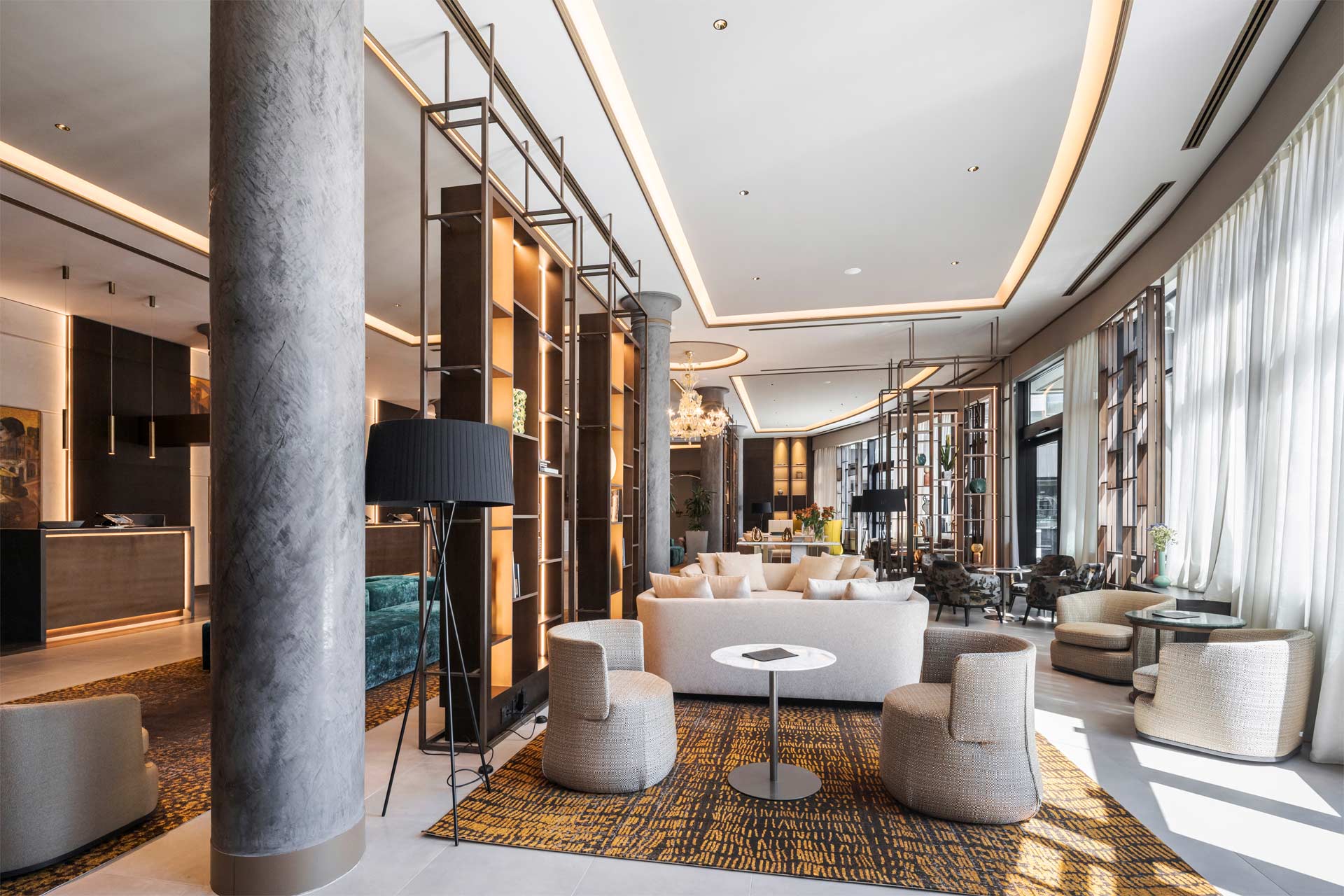
In the communal areas, the design creates a sequence of spaces with different degrees of openness and intimacy. Bespoke furnishings define the various areas while maintaining visual continuity, whereas the use of wood introduces a warm, tactile element that balances the rigour of the geometry.
The predominantly neutral colour palette is punctuated by carefully chosen colour accents, provided by upholstered furniture and rugs, which help to characterise the spaces and create different atmospheres.
The same attention to proportion and the guest experience informs the renovation of the 317 guest rooms, where clean lines, natural finishes and contemporary furnishings create interiors conceived around comfort and functionality.
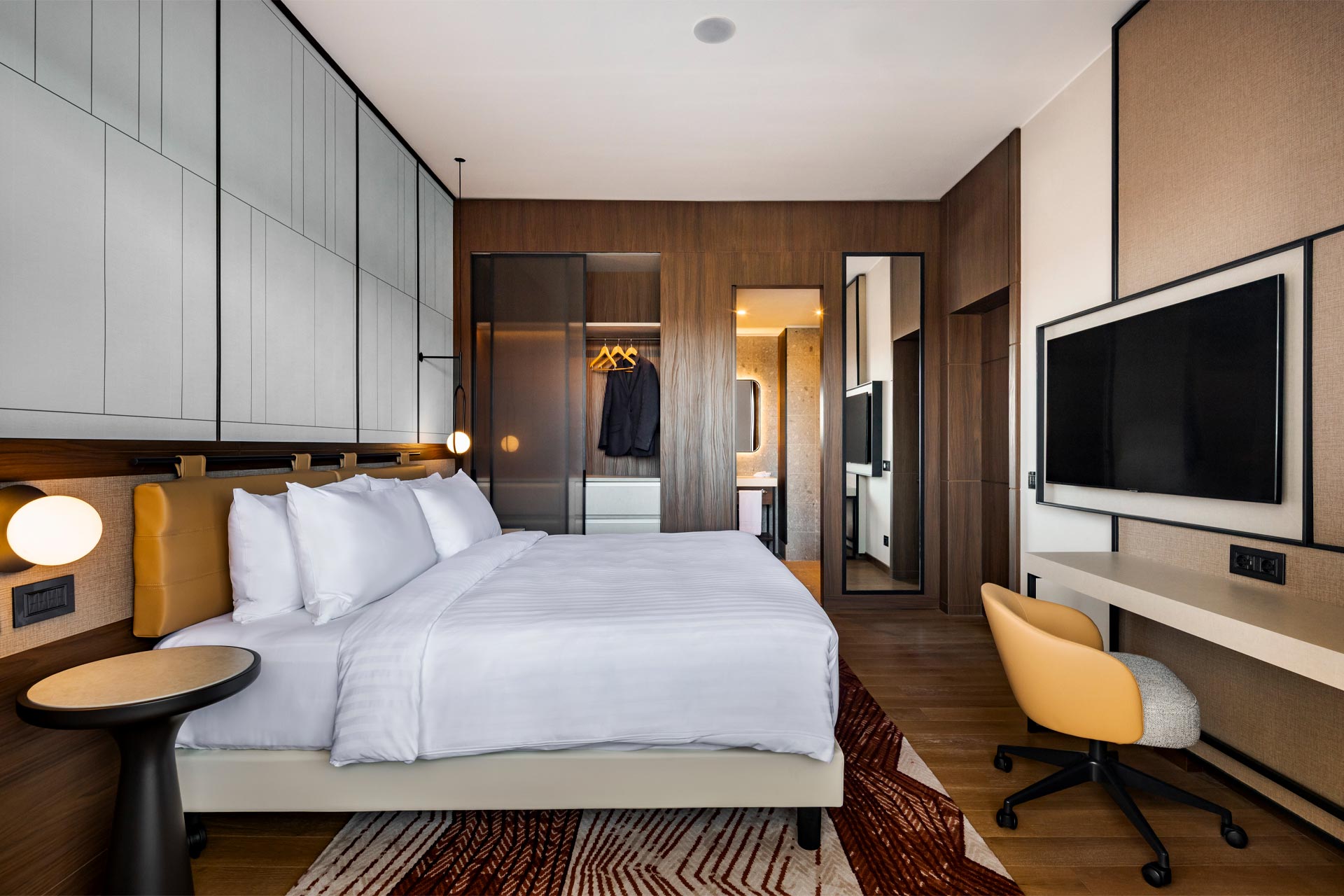
The design responds to the requirements of international hospitality, balancing practical considerations with material quality and a distinctive visual identity.
From the organisation of the spaces to the design of the furnishings and the lighting scheme, the project embodies Spagnulo & Partners’ bespoke approach, rooted in the relationship between architecture, materials and the quality of living.
The result is a hotel that reinvents its character through a restrained design language, capable of interpreting the demands of contemporary hospitality whilst maintaining a connection with its history.


